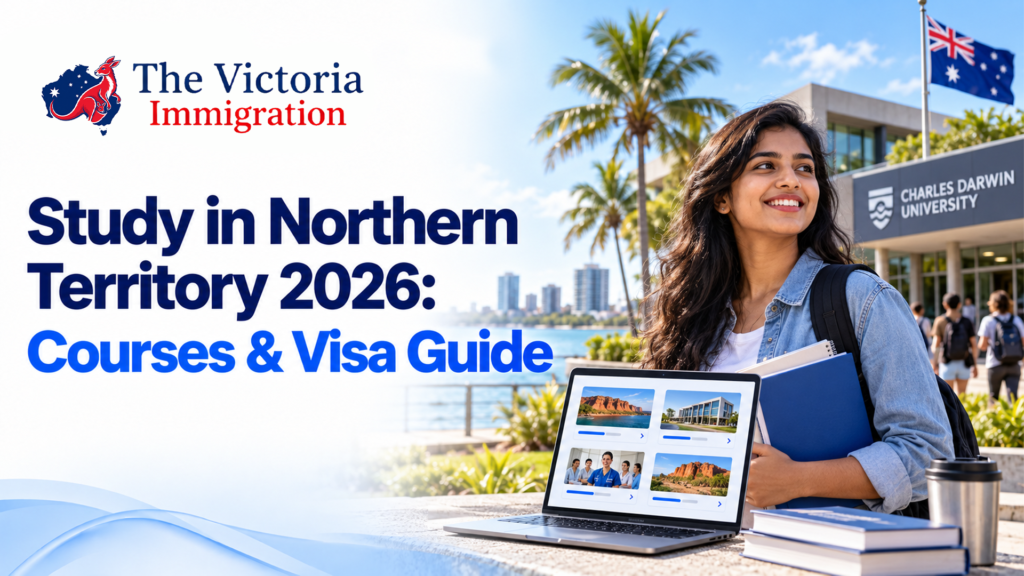
Australia’s east coast cities get most of the spotlight, but the Northern Territory is quietly building a reputation of its own. Warm weather, close-knit campuses and a genuinely multicultural community make it an appealing option for students who want more than just a classroom. Darwin sits at the centre of it all, with Alice Springs and a few regional towns offering their own flavour of Australian life. Choosing to study in Northern Territory in 2026 means smaller class sizes, real support from lecturers, and a lifestyle that mixes tropical scenery with genuine career opportunities. This guide covers the courses on offer, what things cost, how the student visa works, and what comes after graduation. If the paperwork feels overwhelming, The Victoria Immigrations is there to help you sort through it.
Australian qualifications carry weight everywhere, and NT institutions follow the same national standards you’d find in Sydney or Melbourne. Charles Darwin University and several VET providers offer everything from certificates to postgraduate degrees, so there’s room to grow no matter where you’re starting from. Beyond the classroom, you get Darwin’s tropical climate, Indigenous cultural experiences you won’t find elsewhere, and an outdoor lifestyle that’s hard to beat. Because the student population is smaller, support services feel more personal, and it’s far easier to build real connections with classmates and staff.
Darwin is the main education hub, home to Charles Darwin University’s campuses alongside training providers and English-language schools. It has the transport links, part-time jobs and accommodation you’d expect from a capital city, just on a smaller scale. Alice Springs offers something different: a tighter regional community that suits students drawn to health, community services or Indigenous-focused study. Course availability shifts between intakes, so check what’s currently open before you apply.
Charles Darwin University runs programs across business, IT, engineering, health, nursing, education and environmental science, plus vocational pathways through its TAFE-style courses. Other providers fill gaps with diplomas and certificates in hospitality, trades and community services. Rather than picking a course for its location, compare accreditation, entry requirements and where past graduates have ended up.
Tuition and living costs vary by course level and lifestyle, so treat any single figure with caution. VET certificates generally cost less than a bachelor’s degree, and postgraduate fees sit higher again. Rent, food, transport and everyday expenses add up too, and Home Affairs publishes the minimum funds you’ll need to show for your visa. Scholarships can soften the load. The Study in Australia’s Northern Territory Scholarship has historically covered part of an eligible student’s first year of tuition, though the 2026 round is currently closed, so check Study NT for the next intake. Universities run their own merit awards as well, and a strong personal statement genuinely improves your chances.
Almost every international student heading to the NT will need a Australia Student VIsa Subclass 500. It requires a Confirmation of Enrolment, valid Overseas Student Health Cover, and evidence you meet the Genuine Student requirement, which applies to every application lodged from 23 March 2024 onward. You’ll need to show you can genuinely cover tuition, living costs and travel, plus English proficiency through IELTS, PTE or a similar test where required. Offshore applications currently sit under Ministerial Direction 115, which ties processing priority to your chosen provider, so timelines vary and shouldn’t be assumed.
Student visa holders can work part-time during term and more freely during scheduled breaks, though the exact weekly limit is set by Home Affairs and worth confirming before you rely on it. Many students pick up hospitality, retail or admin roles to cover everyday costs while keeping their course progress on track. After graduation, local industries in tourism, health, education and construction often look for skilled workers, and university career services can connect you with internships along the way.
No course guarantees Australia Permanent Residency, and it’s worth being upfront about that. What choosing to study in Northern Territory can do is fit into a broader migration strategy, depending on your occupation, skills assessment, points and the visa subclass you eventually pursue. State nomination, employer sponsorship and graduate pathways each carry their own rules, and those rules change over time. If migration is part of your plan, pick a course connected to your intended occupation and get advice early.
Sorting through course options, entry requirements, visa conditions and scholarship applications on your own takes real time and energy. The Victoria Immigrations helps students compare institutions, check eligibility, prepare Genuine Student statements and pull together the documents Home Affairs expects, while also talking through how your course choice connects to future migration plans. You can learn more on the Victoria Immigrations homepage.
The Northern Territory won’t suit every student, but for those wanting a genuine Australian education away from the big-city rush, it’s worth serious thought. Base your decision on your goals, your budget and your eligibility rather than the scenery alone. Visa rules and scholarship terms shift, so confirm the latest requirements before you apply, and reach out to The Victoria Immigrations if you’d like guidance suited to your own situation.