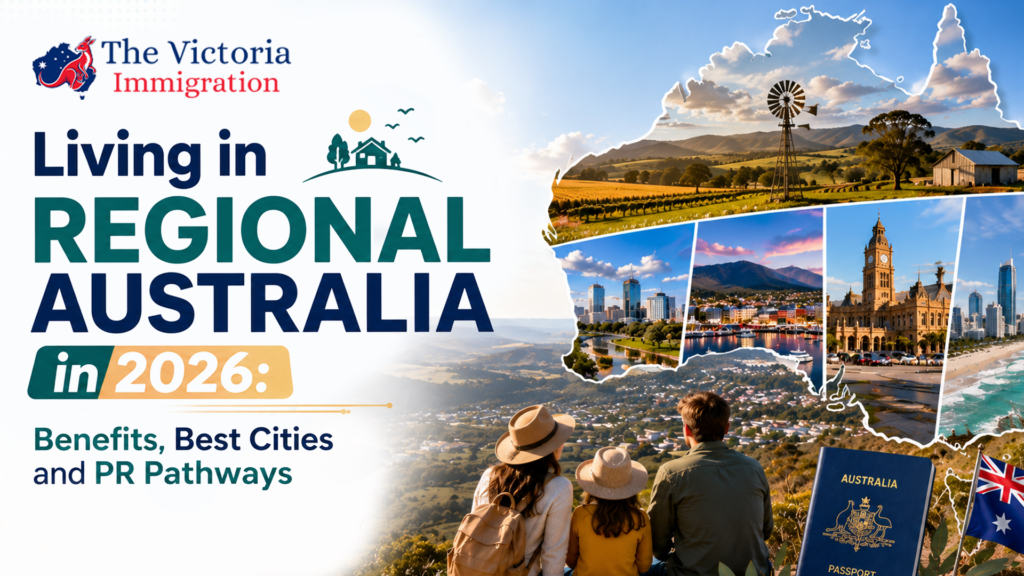
Australia isn’t just Sydney and Melbourne anymore, and if you’re planning a move in 2026, that’s genuinely good news. More skilled workers, students, and families are choosing regional Australia over the big capitals, and it’s not just about escaping traffic. The government has quietly rewired its migration system to reward people who settle outside the major hubs, which means living in regional Australia in 2026 can open doors that Sydney or Melbourne simply won’t.
Whether you’re a nurse, an engineer, or a family weighing up your options, this guide walks you through what regional Australia actually means, why it’s booming right now, where families are thriving, and how it connects to permanent residency. And if you’d rather skip the guesswork, The Victoria Immigrations has helped applicants navigate exactly this path.
Here’s the part that surprises most people: regional Australia isn’t remote outback towns with one petrol station. For migration purposes, it’s everywhere except Sydney, Melbourne, and Brisbane. That means Adelaide, Perth, the Gold Coast, Newcastle, Wollongong, Geelong, Hobart, and Canberra all count as regional. You get city-level infrastructure, decent salaries, and a real social scene, minus the capital-city price tag.
The Australian government promotes this classification deliberately, to spread skills, ease housing pressure in the big three cities, and fill labour gaps in healthcare, construction, and agriculture.
A few things are pushing this trend. First, skilled visa places for the major state-nominated categories have tightened noticeably, so competition for city-based pathways is fierce. Second, regional visas still carry generous bonus points on the skills test, which matters a lot when invitation rounds get selective.
Third, the cost-of-living gap is real: renting in a regional centre can cost roughly half what you’d pay in inner Sydney, while wages in in-demand sectors stay competitive. Add growing infrastructure, better broadband rollout, and stronger community networks, and you can see why families are rethinking their first-choice city.
Of course, it’s not all upside. Public transport can be patchy, specialist healthcare sometimes means a longer trip, and entertainment options are more limited than in a capital city. Most families adjust within a few months, but it’s worth going in with realistic expectations rather than a postcard version of regional life.
City | Why Families Like It |
Adelaide, SA | Big-city amenities, affordable housing, strong healthcare |
Geelong, VIC | Coastal lifestyle, fast train to Melbourne, growing job market |
Ballarat & Bendigo, VIC | Heritage charm, solid schools, low housing costs |
Toowoomba, QLD | Agricultural and trade jobs, cooler climate, close-knit community |
Newcastle & Wollongong, NSW | Beaches plus city infrastructure, strong healthcare and education sectors |
Launceston, TAS | Affordable, scenic, growing tech and tourism industries |
Albury-Wodonga | Border-town flexibility across NSW and Victoria, family-friendly pricing |
Each of these ranks well on the same checklist migrants should apply anywhere: job availability in your occupation, school quality, housing affordability, and, of course, whether the location supports your visa pathway.
This is where regional migration really earns its reputation. Three visas anchor the system:
Compared with the ultra-competitive metro pathways, the 191 is considered one of the more achievable roads to permanent residency, provided you meet the residence and income conditions along the way.
Don’t just pick a city because it looks pretty in photos. Research local job demand for your occupation, confirm your visa eligibility, and get your skills assessment moving early, since it typically takes the longest. Line up English test results, start job hunting before you land, and sort accommodation ahead of arrival rather than scrambling once you’re there. For families, factor in school enrolment timelines and whether both partners can realistically find work locally.
Is regional Australia cheaper than Sydney or Melbourne?
Yes, generally rent and everyday costs run noticeably lower.
Which visas support regional migration?
Mainly the 491, 494, and the permanent 191.
Can international students stay in regional Australia after graduating?
Many regional study locations offer extended post-study work rights, so it’s worth checking eligibility before you enrol.
Does regional living actually improve PR chances?
Yes bonus points, dedicated allocations, and a defined three-year pathway to the 191 all work in your favour.
Can my family come with me on a regional visa?
In most cases, yes, eligible family members can be included as dependents.
Regional migration rewards preparation, and the rules shift often enough that DIY research can leave gaps. The Victoria Immigrations helps skilled workers, students, and families assess eligibility, choose the right regional pathway, and manage the paperwork from skills assessment through to permanent residency.
If living in regional Australia in 2026 sounds like the right move for your career and your family, book a personalised consultation with The Victoria Immigrations before you apply.